One Shoot, Five Income Streams: The Pipeline That Turns a Saturday Session Into a Stock Portfolio
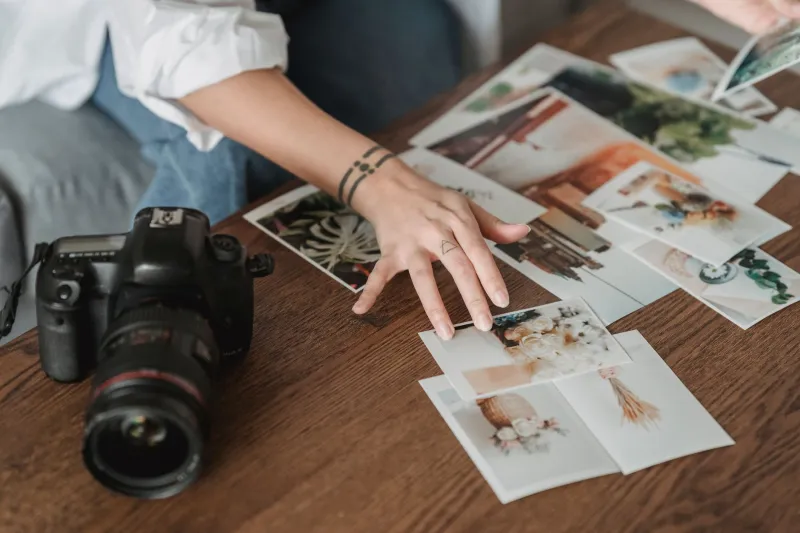
You just wrapped a four-hour shoot. The client's happy, your cards are full, and if you're like most creators, those images are about to live exactly one life: delivered, posted, forgotten.
That's leaving money on the table. A single well-planned session — say, a lifestyle spread shot in a sunlit Brooklyn loft — can be repackaged into five distinct revenue streams without shooting a single additional frame. The difference between creators who do this and creators who don't isn't talent. It's pipeline.
Start With the RAW File, Not the Deliverable
Everything begins with how you shoot. If you're capturing JPEGs only, you've already capped your resale potential. Stock marketplaces and print buyers want RAW files edited to spec, and the flexibility to re-edit for different markets is where the real leverage lives.
Shoot with repackaging in mind:
- Leave negative space. An image with breathing room on one side works as a book cover, a website hero, and a social template. A tightly cropped shot works in exactly one place.
- Shoot horizontal, vertical, and everything between. Microstock sites and print buyers want different aspect ratios. Reframe the same setup three ways before moving on.
- Vary the mood within a setup. A brighter grade sells to wellness brands; a moodier one sells to editorial. Same scene, two products.
Stream One: Microstock and Editorial Licensing
This is the volume play. Sites like Adobe Stock, Shutterstock, and Alamy reward consistency over artistry — a single shoot might yield 30 to 60 uploadable assets once you cull the near-duplicates.
The technical checklist matters here. Export at full resolution, strip no metadata that identifies you, and keyword ruthlessly. Buyers find images through search, so a photo of a woman working on a laptop in a coffee shop needs keywords covering the subject, the mood, the setting, and the use case. Ten minutes of keywording per image pays off for years.
The rejection trap: marketplaces reject for technical issues far more often than artistic ones. Watch for noise in shadows, chromatic aberration on high-contrast edges, blown highlights, and — the silent killer — trademarks and logos in frame. That Nike swoosh on a passerby's sneaker will bounce your image every time.
Stream Two: Print Sales
The same loft session that feeds microstock can produce a handful of gallery-worthy frames. The difference is curation and finish: print buyers want your strongest 5 to 10 images, not your 50 most adequate ones.
Sell through Etsy, Fine Art America, or your own site. Export at 300 DPI for the largest print size you'll offer, soft-proof against your print lab's profile, and price limited editions higher than open runs. A single signed 16x20 print often earns more than a year of microstock royalties on the same frame.
Stream Three: Digital Products
Here's where cropping and retouching become product design. From one session you can build:
- Social media template kits — crop lifestyle shots into Canva-ready frames and sell on Creative Market
- Desktop and phone wallpaper packs — vertical crops with a subtle grade, sold on Gumroad
- Background and texture packs — those "boring" negative-space shots? They're exactly what designers search for
The key mental shift: you're no longer selling photographs, you're selling assets. A wallpaper is a crop decision plus an export setting. The marginal cost is minutes; the margin is near 100%.
Stream Four: Social Kits and Content Bundles
US small businesses — the coffee shop on Main Street, the yoga studio in Austin — will pay for ready-to-post content. Bundle 20 to 30 on-brand images from a shoot into a quarterly content kit and pitch it directly to businesses in the niche you shot. One session, priced at a few hundred dollars, sold repeatedly to non-competing businesses in different cities.
Stream Five: The Long Tail — Your Own Site
Keep the best-sellers on your own portfolio site with direct licensing. It's the slowest stream to build and the only one where you keep the full price. A simple licensing page with clear usage tiers beats a PDF price sheet every time.
The Common Mistakes That Sink a Portfolio
- Over-editing before uploading. Heavy presets look dated in two years. Keep master edits clean.
- Uploading everything. Cull hard. A weak image dilutes your entire portfolio's search ranking.
- Ignoring model and property releases. No release, no commercial license, no sale. Get signatures on shoot day, not three months later when you can't find the person.
- One grade, one life. Re-edit your best frames for different markets before you archive the session.
The math is simple. A session you've already shot costs nothing extra to repackage. Five streams from one afternoon is the whole game — and once the pipeline exists, every future shoot feeds it automatically.